
Today, when you see veterans interviewed on TV, or you hear newscasters referring to U.S. military engagements, the locations are all in the Middle East — Iraq, Afghanistan, Lebanon, Syria, and even Iran with an air strike.
Our involvement in Vietnam began in the 1950s, initially by sending advisors over to help the South Vietnamese government fight the communists of the North. Things heated up in the 1960s and then grew wildly under Lyndon B. Johnson as president and commander-in-chief, with half a million American troops fighting for the South in 1969.
By the time Richard Nixon and Henry Kissinger brought our involvement to a close in 1973, we had lost 58,200 souls.
Living through that era, what sticks out to me is how young white men did their best to avoid the conflict. A typical out-route was to go to college and stay as long as you could so you could get a draft deferral.
Other strategies included feigning — or creating — physical and/or mental conditions that would guarantee you’d fail your draft physical. Fleeing to Canada was another option.
For the most part, however, eligible white youths took to demonstrations and protests to voice their displeasure with the thought of war.
Now, I don’t want to sound like a warmonger. I’m just giving all this as a background to those zillions out there who have no knowledge of the Vietnam War, nor any experience with the military draft except maybe to file when you turn 18.
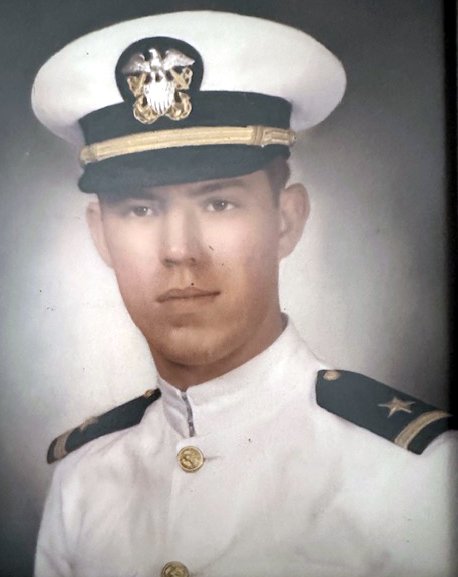
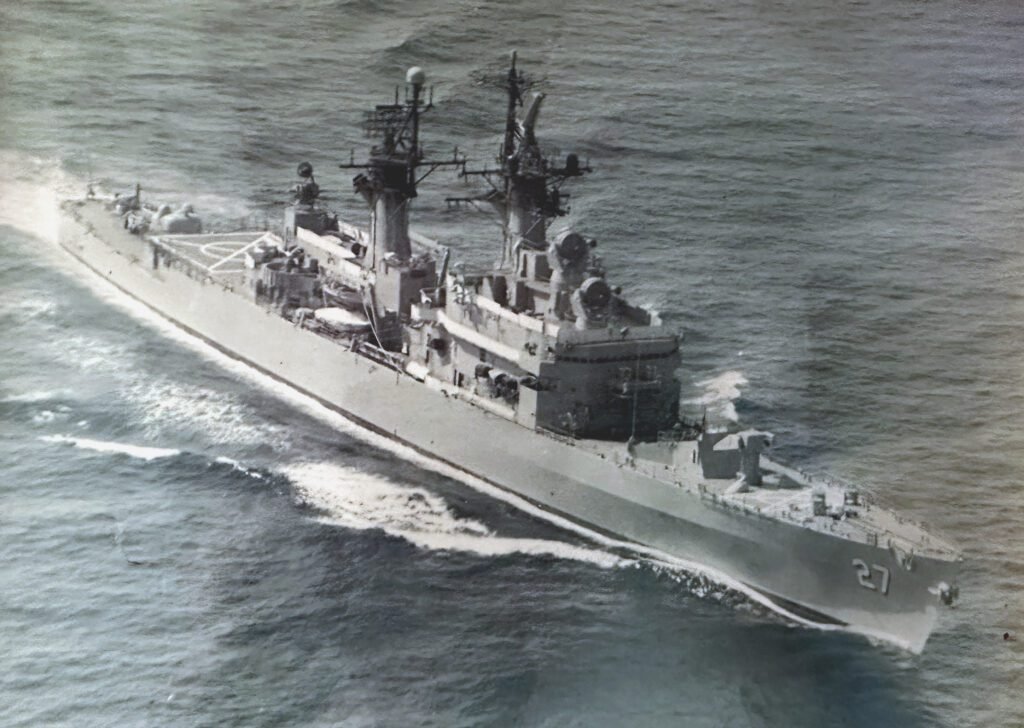
This background serves as a prelude to my military experience. I volunteered for the Navy while in college. Fortunately, I was smart enough to join a program called Reserve Officer Candidate (ROC), so I entered the U.S. Navy aboard the USS Josephus Daniels (DLG-17, pictured) in 1968 as an Ensign and left as a Lieutenant in 1972 to rejoin civilian life and pursue a career in journalism.
My first naval gig was a tour of South America under a program titled UNITAS. We visited every country on our circumnavigation except Peru, which had a revolution the day before we were to pull in. Even then Venezuela was an unstable place. Venezuelan troops escorted us into town to protect us while we went ashore to get drunk, chase women, etc.
My last gig was in Vietnam, where my ship, a nuclear-powered frigate, cruised the Gulf of Tonkin to aid with air sorties over Hanoi and Haiphong. It was pretty uneventful, except when a plane went down near us, and we had to launch a rescue effort, which turned out to be futile.
The only other excitement came when we staged a mock invasion by speeding toward the Vietnamese coast as a fleet that included aircraft carriers and several support vessels, even a battleship. The North Vietnamese didn’t even respond, sensing that it was just another American ploy with no teeth behind it.
“No guts, no green stamps,” we used to say at the time, which brings up the question for most of you, “What’s a green stamp?” Answer: S&H Green Stamps were a popular loyalty and rewards program in the United States from the late 1800s through the 1980s. Green Stamps were savings coupons that you accumulated through your purchases.
Bye, bye, Navy and Vietnam: Years later, while out in the “real” world and going from job to job to survive, I kept asking myself why I didn’t stay in the Navy for 20 years. I could’ve retired with full benefits and health care at 42 and still had plenty of time to pursue more earthly challenges.
Oh, well, live, learn, and regret.
Leave a Reply